 Khokhloma tableware, The Golden Khokhloma Museum, Semyonov
Showing posts with label Russia. Show all posts
Showing posts with label Russia. Show all posts
Souvenirs from Russia: Khokhloma
Khokhloma tableware, The Golden Khokhloma Museum, Semyonov Folk clay toys from Russia
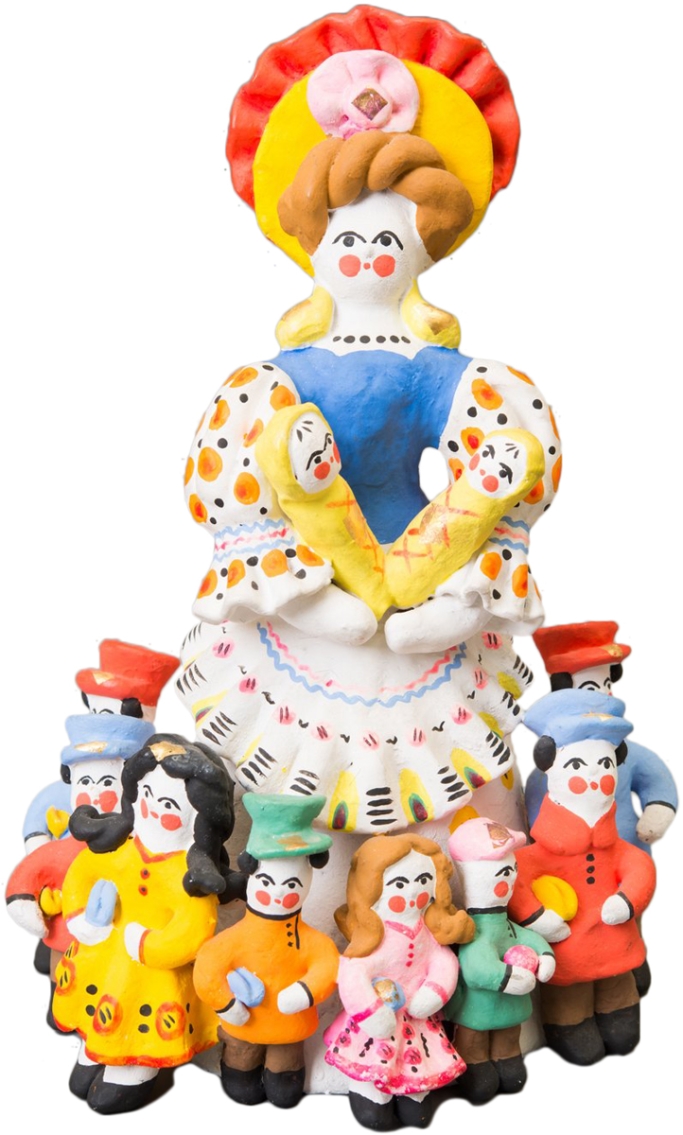 Mother with many children Dymkovo doll, 1960-70s, All-Russian Decorative Art Museum, Moscow
Crafts of Russia: wedding ring shawls of Orenburg

Orenburg shawls are one of the world famous symbols of Russia. These lacy hand-knitted pieces of art are beautiful, warm and so light, fine and delicate that can be pulled through a wedding ring. They are so loved in Russia that there is even a song dedicated to this piece of clothing.
Tonight, when there's frost and there's blizzard
When the snow storm is roaming the road
Will you cover my shoulders, sweet darling,
With an Orenburg downy shawl.
The story of the Orenburg shawl started in the second half of the 18th century, when two older crafts were joined together. One of the predecessors of the fluffy shawl with its cobweb pattern was the thermal Kalmyk or Cossack shawl, which was worn under light clothing in fierce frosts, and knitted in plain stitch from the softest goat's fleece. The other was the fine lace shawls made by Ural Cossack women.
Souvenirs from Russia: Palekh lacquered miniatures

During my last stay in London I found this beautiful decorative place in a local charity shop. And this is not just an ordinary decorative plate but a real treasure: an authentic Palekh lacquered miniature. Distinctive features of Palekh miniatures are brightly painted scenes over the black background; elongated, graceful figures(as on icons) and elaborate gold and/or silver ornamentation applied in fine lines throughout the painting. A genuine miniature also has on it a name of the artist and the year when it was created. My dish dates from 1989 and the artist's name is T.Bolshakova.
The exquisite, highly detailed miniatures painted in Palekh are called "small miracles" and they are on a great demand among the collectors throughout the world. So, I was really lucky to have mine for 8 GB pounds only. The painted image is of Ivan attempting to capture the mythical Fire-bird.
The Palekh art didn't exist till the beginning of the 20th century. Previously the small Russian village was a center of icon painting. The Revolution of 1917 changed that, the new government closed down the churches and banned icon production. The holy images were no longer on demand and the icon painters of Palekh found themselves out of work. The new times demanded new themes and subjects. So, Palekh artists had to use their skills and technique to create something different and they started to paint characters and scenes from real life, literature and fairytales using papier-mâché boxes as their canvas. Below are a few examples of beautiful Palekh miniatures from collections of different museums of Russia
Subscribe to:
Posts (Atom)